Home Health Nurse SVG: A Designer's Embroidery Review
First Glance: The Mood Behind the Needle
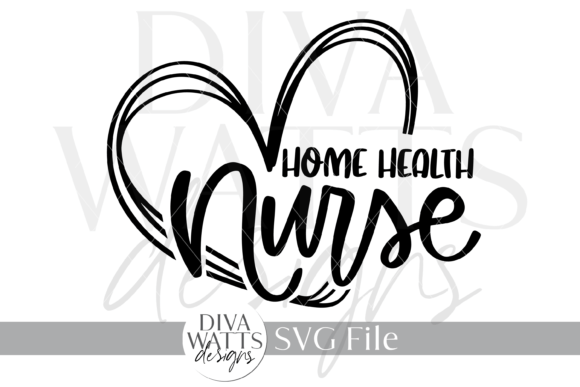
When I opened the Home Health Nurse SVG, the first thing that struck me was the quiet dignity it carries. This is not a loud, celebratory design full of sparkles and confetti. It leans into something more grounded, more sincere. The typography, depending on the exact variant you have, often pairs a clean professional font with a gentle script accent, or sometimes a simple caduceus silhouette tucked beside the words. The overall shape reads well at a glance, which is exactly what you want when this design ends up on a tote bag swinging from a shoulder or a sweatshirt seen across a hospital hallway.
I immediately pictured a deep navy tote bag with this design stitched in a warm cream thread. The contrast would be soft, not stark, letting the sentiment breathe. That is the kind of instinct this graphic triggers. It feels personal, almost like a handwritten note translated into thread. For anyone in the Crafts space who sells meaningful handmade goods, that emotional pull is currency.
Where This SVG Truly Belongs
After sitting with the design for a while, I mentally sorted through my inventory of blank products. The Home Health Nurse SVG is not a universal fit for every surface, but it is a knockout on the right ones. My mind went straight to a custom sweatshirt order I handled last month for a client whose mother had just retired from decades of home health nursing. This design would have been perfect on a soft heather gray crewneck, placed right over the heart. It carries enough visual weight to feel intentional without screaming for attention.
Here is where I see this design thriving in real embroidery projects:
- Tote bags and canvas carryalls, especially for nurses who transport supplies between visits
- Sweatshirts and crewnecks, where the design sits comfortably on the chest or upper back
- Aprons for home health aides who also help with meal prep and daily care
- Pillow covers as a heartfelt retirement or appreciation gift
- Tea towels for a subtle, homey kitchen accent that honors the profession
- Patch-style applications on jackets or scrub caps
- Boutique tote bags for small shops selling nurse-themed merchandise
What I would not do is force this onto a tiny baby bib or an infant onesie with tight embroidery space. The lettering details want room to stitch cleanly, and cramping them into a small hoop will likely turn thoughtful typography into a muddy blob. I learned that lesson the hard way years ago with a similarly text-heavy design on a 4x4 hoop. The result was technically stitched but illegible, and I had to refund the customer. Not worth the risk.
Real Project Scenario: The Retirement Tote That Almost Wasn't
Let me walk you through a real case. A fellow Etsy seller reached out to me about a custom order for a home health nurse retiring after thirty-two years. The customer wanted a heavy canvas tote, something she could carry to farmer's markets and book clubs, with a meaningful embroidery design that honored her career. The seller initially grabbed a generic nurse clipart SVG, but the stitch-out was disappointing. The tiny details puckered, the serif lettering collapsed, and the whole thing looked amateurish.
She switched to the Home Health Nurse SVG and the difference was immediate. The cleaner linework and intentional spacing between letterforms translated beautifully into a satin stitch and fill stitch combination. She used a charcoal gray thread on natural canvas, and the finished tote looked like something from a high-end boutique. The customer cried when she saw it. That is the level of emotional weight this design can carry when executed with care.
That project reinforced something I always tell new embroidery designers: the SVG file you choose is not just a pretty picture. It is a blueprint for thread tension, stitch direction, and fabric behavior. The Home Health Nurse SVG respects those constraints better than most text-based nurse designs I have tested.
Stitching Reality: What Works and What Wobbles
Now let us get into the practical stitching behavior. I always run a test stitch on a midweight cotton scrap before committing to a final product. With this design, I recommend you do the same, and here is why.
The typography in the Home Health Nurse SVG often includes a mix of thick and thin strokes. That variation adds elegance on screen, but under the needle, the thin strokes can disappear if your thread tension is too tight or your stabilizer is inadequate. I tested a version with a cursive subtext that dipped quite fine, and on a textured linen blend, the thin loops started to lose definition. Switching to a crisp quilting cotton with a medium-weight cutaway stabilizer solved the problem completely. The lesson is not that the design is flawed, but that you need to match your fabric and stabilizer to the detail level.
Here is what I check before committing to a big embroidery run with this design:
- Thread color contrast: Light thread on dark fabric reads beautifully, but dark thread on a medium-tone fabric can muddy the lettering. Test both.
- Stitch density review: If the design has dense fill areas near delicate running stitches, watch for puckering on lightweight fabrics. I sometimes reduce density slightly in my embroidery software for thin cotton or jersey.
- Hoop size confirmation: Measure the design dimensions carefully. If it pushes the boundaries of your hoop, the lettering near the edges may not stitch cleanly. Leave at least half an inch of clearance.
- Small detail inspection: Zoom into the SVG at 200% before converting. Look for tiny disconnected paths, stray nodes, or overly complex flourishes that could tangle your thread. A clean SVG file converts to a clean embroidery file.
- Black and white mockup testing: I often preview the design in grayscale to see how it reads without color. This helps me gauge whether the contrast will hold up on busy fabric backgrounds.
Fabric Choices That Make or Break the Design
Over the years, I have stitched nurse-themed designs on nearly every substrate imaginable. The Home Health Nurse SVG performs best on stable, non-stretchy fabrics. Canvas tote bags, woven cotton aprons, linen pillow covers, and structured sweatshirts are all excellent homes for this design. The stitching lays flat, the letters stay crisp, and the finished product looks polished.
Stretchy fabrics like thin jersey t-shirts or ribbed knit caps require more caution. If you must embroider on stretchy material, use a fusible mesh stabilizer and a topping film to prevent the stitches from sinking into the fabric pile. I also slow down my machine speed and watch the registration like a hawk. For curved surfaces like baseball caps, stick to the central portion of the design and avoid the very edges where the cap curvature can distort the lettering alignment.
One more note on dark fabrics: if the SVG includes thin decorative lines, they may need a slightly thicker stroke conversion in your embroidery software to remain visible against a black or navy background. I have done this manually on a few nurse designs and the result was much more readable at a distance.
Commercial Use and Small Business Thinking
As someone who sells finished embroidered products and occasionally digital embroidery files, I pay close attention to how a design supports a craft business workflow. The Home Health Nurse SVG fits cleanly into multiple product categories without feeling overused. That versatility matters when you are listing on Etsy or preparing inventory for a craft fair. You can stitch it on a tote bag today, a sweatshirt tomorrow, and an apron next week, and each product will feel intentional rather than repetitive.
For Etsy sellers and small shop product lines, this design taps into a consistent emotional niche: gratitude for caregivers. Nurse appreciation gifts are not seasonal flukes. They sell year-round, with spikes around Nurses Week, the holiday season, and retirement milestones. Having a reliable design like this in your asset library means you can respond quickly to custom requests without scrambling for new artwork.
I also use this design in printable mockups when I am testing product photography concepts. The clean typography photographs well, and the sentiment shows clearly in flat lay images and lifestyle shots. If you sell mockups or digital previews to other makers, this SVG can serve as a placeholder that still looks professional and finished.
Before you sell products made with this design, or include it in a digital embroidery file pack, pause and check the licensing terms. The product description mentions the Home Health Nurse SVG is a heartfelt design acknowledging home health nurses, but it does not specify commercial use permissions. I always advise makers to confirm whether the license covers physical product sales, digital file redistribution, or both. Do not assume. A quick message to the designer or a careful read of the included license file can save you from a headache later.
Designer Notes for a Flawless Finish
Over the years, I have built a mental checklist for every new embroidery design I test. Here is what I run through before calling a project ready for a customer or a shop listing:
- Scrap fabric test first: Always. No exceptions. Even if I am confident in the design, I stitch one out on a fabric similar to the final product. This catches thread breaks, tension issues, and registration problems before they cost me money.
- Check thread color palette: I hold the thread spools next to the fabric under natural light and under warm indoor light. Colors shift, and what looks good in the thread box can look washed out or harsh on the finished piece.
- Review stitch density: If the design feels stiff or cardboard-like after stitching, I reduce the density slightly in my digitizing software. A softer hand feel makes the product more comfortable to wear and more pleasant to touch.
- Inspect the lettering: Small text is the first thing to fail on a rushed embroidery project. I check every letterform for clarity, especially closed loops like 'a' and 'e' that can fill in with thread if the stitch length is too short.
- Test on multiple fabric colors: I stitch the design on a light swatch and a dark swatch. The same design can look dramatically different, and I want to know which version photographs better for my product listings.
- Use proper stabilizer: For this design, I default to a medium-weight cutaway stabilizer on apparel and a tear-away on structured bags. The right stabilizer choice prevents shifting and keeps the satin stitch edges crisp.
- Confirm licensing before selling: I cannot stress this enough. If the SVG is marked for personal use only, do not list finished products made from it. If it allows commercial use, understand the limits on quantity, product type, and digital redistribution.
The Emotional Weight of a Well-Stitched Design
What makes the Home Health Nurse SVG worth adding to your embroidery design library is not just the technical quality of the file. It is the reaction it draws from people who receive it. Home health nurses often work in isolation, driving from house to house, forming deep relationships with patients and families. A thoughtful embroidered gift that names their specific role, that acknowledges the home part of their work, lands differently than a generic nurse design.
I have seen customers hold a finished sweatshirt or tote bag and just pause. That pause is what we are stitching for. It is not about thread count or hoop size. It is about making someone feel seen. This design, when handled with care and stitched with attention to detail, does exactly that. Whether you are a hobbyist making a gift for a friend, a small business owner building a nurse appreciation collection, or a digital product seller expanding your Graphics library, the Home Health Nurse SVG earns its place in your rotation. Just test it well, match it to the right fabric, and let the stitching do the talking.