Christmas Pain Scale Nurse SVG: A Designer’s Take
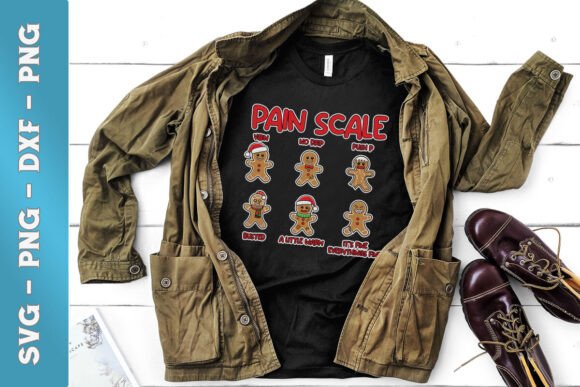
When I first loaded the Christmas Pain Scale Nurse SVG into my design software, I felt a grin spread across my face. This is not a quiet, overly polite holiday graphic. It blends dark medical humor with a seasonal twist, and that combination brings a mischievous warmth that standard snowflakes and reindeer simply cannot match. The layout centers on a familiar pain scale chart, but the numbered faces carry a wink of exhaustion that every nurse, doctor, and healthcare worker knows intimately. The Santa hat perched on the header and the tiny candy cane accents soften the mood without stealing the joke. For an embroidery designer, that balance is gold. The visual personality reads instantly, and the message lands hard with a very specific audience. I can already picture the finished stitch on a worn-in sweatshirt, the kind of gift that gets a genuine, tired laugh after a twelve-hour shift.
Before I ever digitize a file, I study how a design will behave under thread, not just on a screen. The Christmas Pain Scale Nurse SVG carries a clean, recognizable silhouette that matters tremendously for embroidery. The central scale uses a vertical arrangement of circular faces, each with a distinct expression. The linework sits bold enough to translate into a solid satin stitch or a crisp running stitch, but the details inside those faces, the tiny eyebrows, the slight curve of a frown, require careful evaluation. As a reviewer, I appreciate that the design avoids ultra-fine hairlines that would vanish on textured fabric. The negative space inside each face acts as a natural breathing room, which means the embroidery won’t turn into a dense, bulletproof patch of thread. This creates a softer hand feel on garments, and that matters when someone is wearing the finished product all day.
The Narrative Personality Hiding in Plain Sight
What makes this crafts graphic genuinely useful for stitchers is the storytelling it already contains. The pain scale moves from a cheerful, wide-eyed zero up to a frantic, screaming ten, and everyone in healthcare knows the tenth face is not really about holiday stress. It is about the patient who threw a bedpan, the missing IV pump, the double shift after a call-off. The Santa hat adds a layer of irony that makes the design feel personal rather than mass-produced. When I evaluate a machine embroidery design concept for real project use, I look for exactly this: a hook that makes the buyer pause, smile, and say, “That’s me.” This design accomplishes that in seconds. The emotional recognition is immediate, and that drives impulse purchases at craft fairs, Etsy shops, and boutique pop-ups.
For a designer prepping a holiday collection, the theme also offers versatility. The comedy is broad enough to work on a unisex pullover, yet specific enough to feel curated for nurses, nursing students, CNAs, and even veterinary staff. The graphics style leans slightly cartoonish, which keeps the tone light. In my experience, medical humor walks a fine line on handmade products. Too grim, and customers scroll past. Too cutesy, and it loses the insider feel. The Christmas Pain Scale Nurse SVG lands squarely in the sweet spot. The faces are exaggerated but not grotesque, and the holiday elements are playful without being saccharine. I can genuinely see this becoming a repeat seller in a small shop’s winter lineup.
Practical Embroidery Use Cases I’d Actually Trust
Let me walk through a real scenario. Last November, I had a client request for a custom set of nurse appreciation gifts. She wanted a design that would work on a structured tote bag, a cozy fleece blanket, and a set of kitchen towels. The Christmas Pain Scale Nurse SVG immediately came to mind. On a mid-weight canvas tote, the design would hold its shape beautifully. The vertical orientation suits a tall, narrow placement, which is exactly what a tote bag front panel demands. On a blanket, I would enlarge the design and use a light fill stitch for the scales, keeping the throw soft and snuggly rather than stiff. For the kitchen towels, I would test the design at a reduced size, watching how the facial features hold up. Tiny eyes and mouths can close up quickly in terry cloth, so I would likely simplify the smallest expressions or use a thinner thread weight.
Beyond that, the design fits naturally on crewneck sweatshirts, long-sleeve tees, zip-up hoodies, and even apron bibs. The humor works for holiday parties, Secret Santa exchanges, and retirement send-offs. I have also seen designs like this used on embroidered patches that nurses attach to their badge reels, lanyards, or scrub caps. A patch format would require a dense edge satin stitch and a merrowed border, but the core graphic is strong enough to survive that conversion. The digital embroidery file potential here is excellent, provided the digitizer respects the original line weight and spacing.
Technical Nuances Every Stitcher Must Respect
I want to be direct about the realities of stitching this design. The Christmas Pain Scale Nurse SVG comes as a digital cutting file, so before you ever touch a needle, you must confirm your machine and software compatibility. The product listing clearly states it works with Cricut and Silhouette cutting machines, but for embroidery purposes, you will need to convert the file into a proper embroidery file format through digitizing software. Do not assume the SVG is stitch-ready. The vector paths provide a clean tracing foundation, but the digitizing process controls stitch type, density, pull compensation, and underlay. Those decisions determine whether the final product feels professional or looks like a beginner’s experiment.
Small hoop sizes demand caution. The pain scale faces occupy a vertical column, and if you try to cram the entire design into a 4x4 inch hoop, the facial details will become illegible. I recommend a minimum hoop size of 5x7 inches for most fabric applications, and larger for plush textiles like blankets. Test the design on a scrap of the same fabric you plan to use, preferably after washing and drying it, so you see how the thread behaves against shrinkage. Textured fabrics like waffle weave, terry cloth, and fleece can swallow fine details, so consider widening the smallest lines during digitizing and using a knock-down stitch underlay to create a smooth stitching surface.
Thread color choices will shape the entire mood. On a light background, the black outlines and red accents pop with satisfying contrast. On a dark background, the design can still work, but you must carefully select thread colors that do not disappear. A dark navy sweatshirt, for example, would require the scale numbers to be stitched in white or a bright silver, and the faces might need a lighter skin tone or a glowing backstitch outline. I always test a monochrome mockup before committing to thread, because what looks balanced on a screen can feel muddy once stitched. The candy cane and Santa hat details are small enough that a single misstep in thread choice can turn them into a blurry blob. Spend extra time on those red-and-white stripes.
Where to Use It, and Where to Pause
This design shines on sturdy, flat surfaces. Think canvas tote bags, cotton twill caps, denim jackets, and woven pillow covers. It also works beautifully on baby onesies if you scale it down and use a soft, lightweight stabilizer, though the humor here is definitely more for the parent than the infant. On stretchy fabrics like performance tees or thin jersey, the design needs extra stabilization and a slight reduction in stitch density to prevent puckering. I would avoid using this design on extremely curved surfaces, like the very front of a structured cap, because the vertical alignment can distort around the crown seam. A flat cap bill or a side panel would be a smarter placement choice.
For commercial embroidery purposes, the design’s license is critical. The product listing does not specify the exact license terms, so you must contact the seller or review the included documentation before using the finished goods for sale. Many SVG designers offer a small commercial license, but restrictions sometimes apply to print-on-demand, mass production, or digital redistribution. Protect your small business by verifying this upfront. Nothing undermines a craft business faster than a license dispute. I always keep a record of my purchase and license confirmation for every design I use in client work.
How the Design Elevates Handmade Business Value
From a seller’s perspective, the Christmas Pain Scale Nurse SVG adds a layer of emotional connection that generic holiday patterns simply miss. A customer browsing an Etsy shop or a craft fair table is not just buying a tote bag. They are buying a moment of recognition, a gift that says, “I see you, and I know your day was ridiculous.” This design delivers that message with humor and heart. The nurse audience is loyal, vocal, and deeply appreciative of products that reflect their reality. A well-stitched sweatshirt or a crisp embroidered patch can become a wardrobe staple, and when that item carries a smart, funny design, it generates word-of-mouth referrals. I have seen simple medical humor designs outsell intricate florals by a wide margin, purely because the message hits home.
Visual appeal also matters for listings. The printable mockup potential here is strong. A clean stitch-out on a neutral background, photographed in natural light, will stop a scroll. The vertical layout of the pain scale fits neatly into a product preview frame, and the red accents draw the eye to the key details. For brand consistency, consider using the same thread palette across multiple products to create a cohesive shop look. The design works as a standalone hero graphic or paired with simple text like “Happy Holidays” or “Nurse Mode.”
Designer’s Checklist Before You Stitch
After years of working with embroidery files, I have a mental checklist I run before any project. I am sharing it here because the Christmas Pain Scale Nurse SVG deserves a thoughtful approach, not a rushed one. First, confirm the file format. This is an SVG, so you will digitize it yourself or hire a digitizer. Second, measure your hoop and choose a size that leaves at least one inch of clearance around the design for stabilizer grip. Third, test thread tension on a fabric scrap identical to your final product. Fourth, inspect the smallest facial details after stitching and adjust the digitizing if any features close up. Fifth, wash and dry the test piece to check for thread shrinkage, color bleeding, and stabilizer residue. Sixth, verify the license for commercial use before listing the finished item. Seventh, take high-quality photos of the stitch-out for your listings, because a real stitch sells better than a digital mockup.
I also recommend running the design through a black-and-white preview. This step reveals contrast issues that color can hide. If the design still reads clearly in grayscale, you know it will hold up on different fabric shades and in varied lighting conditions. The Christmas Pain Scale Nurse SVG passes this test well because the expressions rely on shape, not just color. The scale numbers and facial outlines carry the storytelling load, which is exactly what you want in a robust embroidery design.
My Honest Conclusion for Real-World Use
I have reviewed hundreds of graphics intended for embroidery, and many of them fall apart once thread touches fabric. The Christmas Pain Scale Nurse SVG is not one of those. It arrives with a strong concept, a readable layout, and a built-in audience that will appreciate the joke. For a craft business owner, a designer, or a hobbyist looking to create meaningful holiday gifts, this is a smart addition to your digital library. The design asks for a bit of technical care during digitizing, but the reward is a stitch-out that feels personal, funny, and professionally finished. Use it on a sweatshirt for your favorite nurse, stitch it onto a tote bag for a holiday market, or turn it into a patch that lasts through endless shifts. Take the time to test, stabilize, and choose your thread wisely, and you will have a product that genuinely connects with people. That is the whole point of this work, and this design helps you do it with a smile.